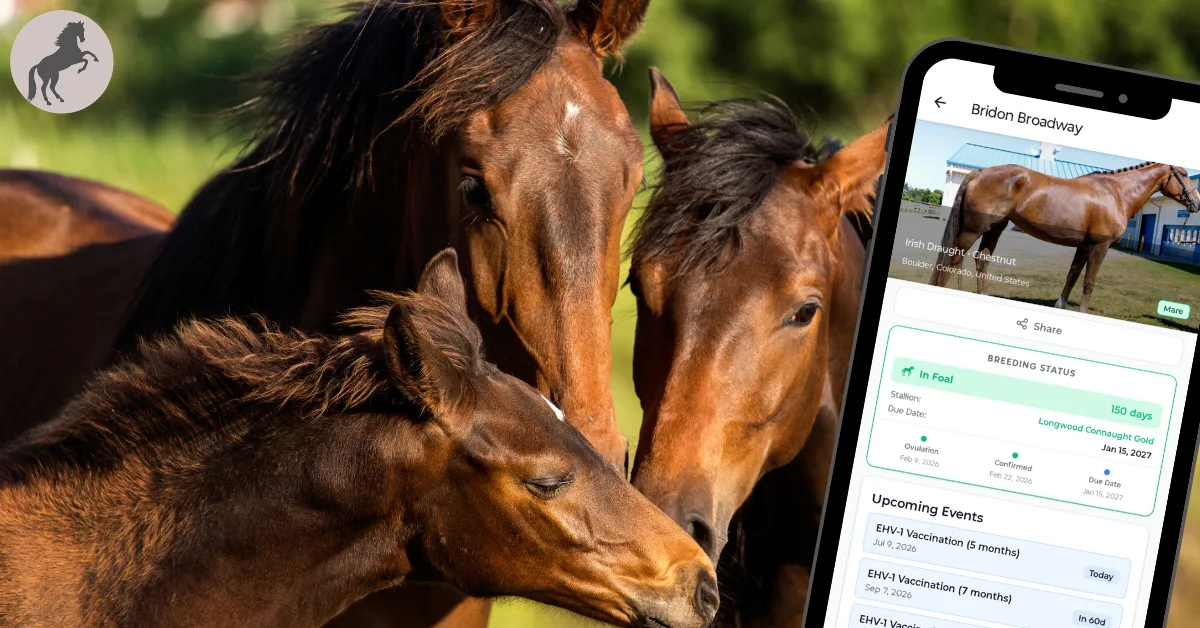
Horse breeding has changed drastically in the past 20 years. Live cover used to be the only way that horses were bred. Now, live cover breedings are in the minority. Breeders used to take a mare to a stallion and "hey presto, job done." These days, breeders and repro vets are doing the work for the horses.
The result of this is that horses that would not have made good breeders 20 years ago are producing offspring. There is good and bad to this. The good is that genetics that might have one day faded away are being passed forward and used, and will continue to be used. The less desirable result is that horses that are not particularly fertile breeders are being bred, and passing on those genes. Because of this, breeders and reproductive vets often have to work quite hard to achieve a pregnancy.
Breeding horses is more complicated now than it was 20 years ago
A single mare may have heat cycles, teasing records, veterinary examinations, ultrasound examinations, ovulation dates, breeding dates, stallion information, semen details, pregnancy checks, treatments, foaling information and eventually a foal. A stallion may have breeding bookings, contracts, collections, semen inventory, shipping records, mare information and financial records.
For a small breeding operation, it is possible to keep track of some of this information using notebooks, spreadsheets, calendars and individual computer files. As the number of horses and breeding events increases, however, keeping everything organized becomes considerably more difficult.
And even a small breeding program with one relatively difficult mare is going to want to keep more detailed records than spreadsheets and calendars allow. With difficult mares, tracking cycles, diagnoses, cultures, cytologies, what worked, what didn't work, did you use extender, didn't you use extender — all of these details matter.
Horse breeding management software is designed to bring those records together in one place. Instead of managing breeding information across notebooks, spreadsheets, emails and calendars, breeders can use software specifically designed around the way a breeding program operates.
What does horse breeding management software do?
You might be skeptical that this is any better than your notebook, right?
At its most basic, breeding management software provides a centralized place to record and retrieve information about horses and their reproductive history. Depending on the software, this can include:
- Mare records and stallion records
- Breeding history
- Heat and cycle information
- Ovulation dates
- Breeding events
- Pregnancy checks and expected foaling dates
- Foaling records
- Stallion bookings and breeding contracts
- Semen collection records
- Fresh, cooled and frozen semen information
- Frozen semen inventory
- Veterinary and reproductive records
- Financial records
- Reminders and important dates
- Foal and progeny records
The idea is not simply to replace a paper record with a digital one. Nor is the idea to make anything harder to do than writing in a notepad.
For example, a breeding date can be connected to the mare, the stallion, the breeding method and the resulting pregnancy. A pregnancy confirmation can then be used to calculate an expected foaling date. This type of connected record keeping is one of the main advantages of using software specifically designed for breeding.
Managing mares
The University of Nebraska's Extension Horses resource recommends maintaining accurate reproductive records for mares, including breeding dates, health information, expected and actual foaling dates, the stallion to which the mare is booked and previous breeding results.
Keeping these records allows a breeder to look back at what happened during a breeding season rather than relying on memory. For example, you may want to know:
- When was this mare bred?
- Which stallion was she bred to?
- When did she ovulate, and out of which ovary?
- How many cycles did it take to get her in foal?
- Was she bred using live cover, fresh semen, cooled semen or frozen semen?
- When was pregnancy confirmed?
- When is she expected to foal?
- What happened in previous breeding seasons?
These questions become much easier to answer when the information has been recorded consistently. A huge advantage of breeding software is that you can share your mare's breeding history with a vet or someone else who might be managing her cycle. You can't share your notepad that easily. Plus, who can read your writing?
This can be particularly useful when a mare is being managed by someone other than her owner. A mare owner might send a mare to a reproductive veterinarian or breeding facility. The people managing the mare during that period may be recording examinations and breeding events while the owner still needs access to the overall breeding history. Software can make it possible for the relevant people to work from the same underlying record rather than maintaining separate sets of information.
Managing stallions
A stallion may have numerous mares bred to him during a breeding season, and the information associated with each breeding may need to be recorded. It can get messy, because things like semen orders can come from a variety of sources, not just the mare owner. You might get a call from a vet, or a text from a mare manager.
Depending on the type of operation, stallion management may include:
- Stallion profile and pedigree information
- Mare bookings and breeding contracts
- Stud fees, collection fees, chute fees and shipping fees
- Semen collections and semen doses
- Fresh or cooled semen shipments
- Frozen semen inventory
- Breeding history
- Customer information
- Income and expenses
The American Association of Equine Practitioners emphasizes the importance of proper breeding-stallion management, and describes cooperation between the veterinarian and stallion manager as an important part of achieving breeding efficiency.
For a stallion standing at a breeding farm or stallion station, the amount of information can become substantial very quickly.
Connecting the mare and stallion records
One of the useful characteristics of breeding management software is that breeding information does not have to exist in isolation. A breeding event can connect:
Mare → Stallion → Date → Breeding method → Ovulation → Pregnancy → Foaling
This means that information entered once can become useful in several places. If a mare is recorded as being bred to a particular stallion on a particular date, that information can become part of both the mare's breeding history and the stallion's breeding records.
This is much more difficult to achieve when information is spread across separate spreadsheets and paper records.
What about breeding contracts and semen?
More comprehensive horse breeding software can extend beyond reproductive records. For stallion owners, the breeding process can involve considerable administration.
A single booking might involve:
- A mare owner selecting a stallion
- A breeding request
- A breeding contract
- A stud fee
- A collection
- Semen preparation
- Shipping
- Breeding the mare
- Recording the breeding
- Confirming pregnancy
- Managing any additional fees
Depending on the software, some or all of this workflow can be managed digitally.
Semen orders and milestones
Semen management can be particularly valuable for stallion operations dealing with cooled or frozen semen. Dedicated equine reproductive software may include inventory records that track semen received, used and shipped — and tie each semen order back to the contract it was ordered against, so a booking's stud fee, orders and eventual pregnancy or foaling outcome all sit on the same record.
Does every breeder need horse breeding software?
No.
A breeder with one easy-breeder mare may find that a notebook, spreadsheet or calendar is perfectly adequate. The breeder doing a one-off breeding likely won't care to keep a detailed breeding history either.
The value of dedicated software generally increases as the amount of information increases. The same is true of stallion operations. A stallion owner breeding one or two mares may not need sophisticated management software, while a stallion station managing dozens of stallions and hundreds of breeding customers has considerably more information to organize.
Horse breeding software vs. a spreadsheet
A notebook can be extremely useful for breeders. It is inexpensive, flexible and familiar. You can have fun with different colored pens and making it look pretty (apparently some people are into that).
But spreadsheets — oh boy, nobody can make a spreadsheet fun. And more to the point, notebooks and spreadsheets are not specifically designed around the relationships between horses and breeding events.
A spreadsheet might contain a list of mares and their breeding dates. A dedicated breeding management system can connect those breeding dates to:
- The mare's complete history
- The stallion
- The breeding method
- The ovulation date
- Pregnancy status and expected foaling date
- Previous breeding seasons
- Financial information
- Veterinary or management records
What is StallionApp?
StallionApp is horse breeding management software designed for both mare owners and stallion owners. It brings breeding records, horse management and the administrative side of a breeding program together in one system.
For mares, StallionApp can be used to record breeding events, reproductive information, pregnancy checks and foaling information. For stallions, it can be used to manage stallion profiles, breeding activity, semen collections, breeding contracts and the financial side of the stallion operation.
It also allows information about a horse to remain connected to that horse's individual record while contributing to the owner's broader breeding-program records.
The aim is simple: instead of having your breeding program spread across notebooks, spreadsheets, calendars, emails and different systems, keep it together in one place.
Where to go next
- Ready to start? How to Add a Horse in StallionApp.
- Want the feature tour? What StallionApp does.
- Season coming up? Preparing for Breeding Season.